
Studio
Aletheia
[uh-LEE-thee-uh]
Stop Delivering Curriculum.
Start Designing It.
Studio Aletheia offers an instructional design framework that empowers teachers to build their own classroom identity, while giving schools and districts the structure to support, observe, and measure it.

01 [ABOUT]
Who we are.
Welcome to “The Studio”. An arthouse where technology, culture, and design converge to reimagine learning. It is a workshop and gallery, a place where educators become artists and those artists become the architects of understanding.
Studio Aletheia turns ideas into visual narratives and academic expressions, enabling learning to become design, and design a shared language.
02[WORKS]
Selected Works.

Concept “A” - “AstroNautical”: Aletheian Avatar Academy

Concept “B” - “Aletheia”: Aletheian Avatar Academy
Concept “C” - “World Builders” Travel Magazine
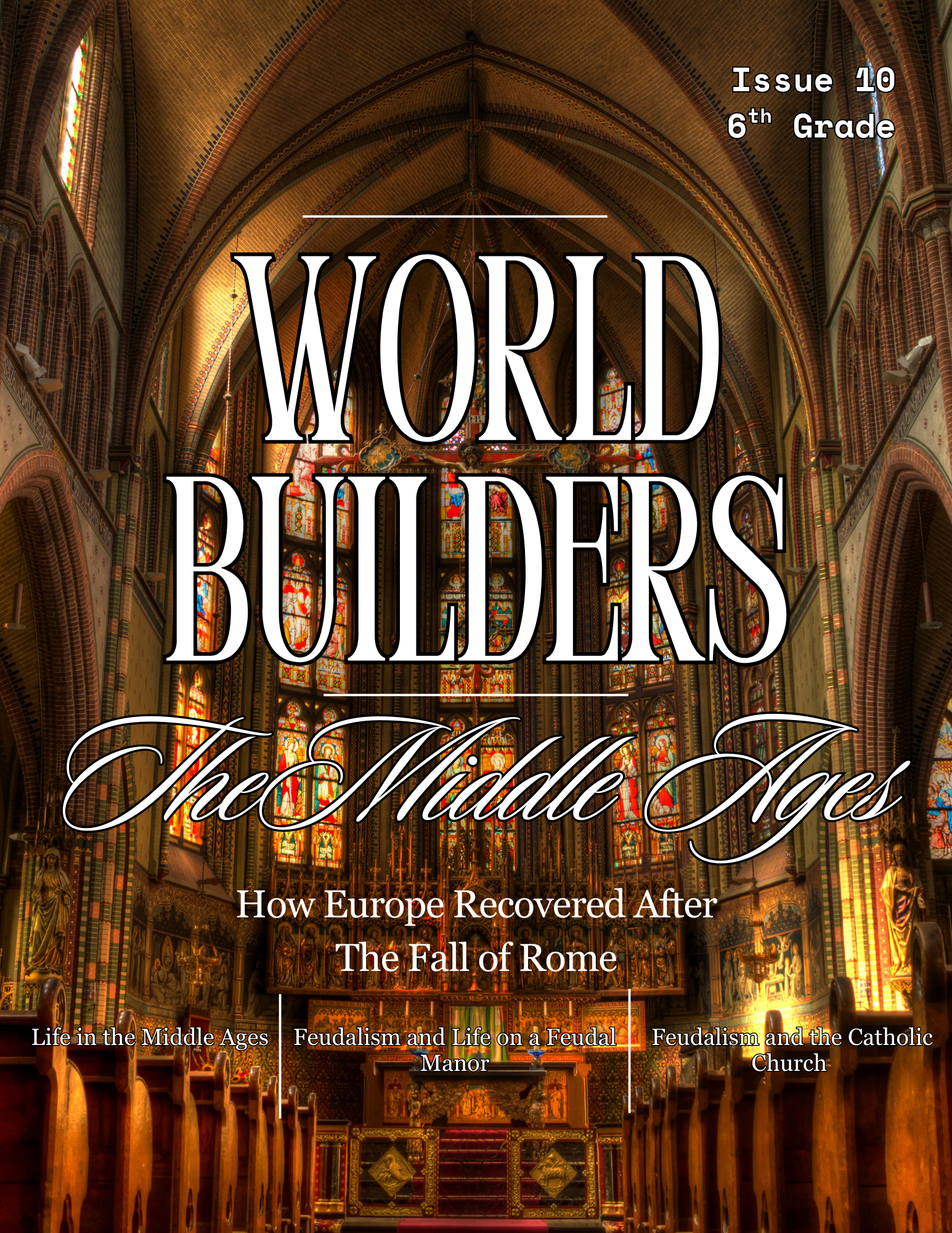

Concept “C” - “World Builders” Cover Gallery Sample


Concept “D” - Digital Badge/ Mastery Badge Sample
Studio Aletheia
Reimagining Worlds For The Modern Visionary.
03[DESIGN]
Aletheian Design Theory.
Enabling Education To Become Art In Motion.
[Step One]
Identity Formation
This phase establishes coherence, trust, and narrative grounding before instruction begins. Educators define a recognizable pedagogical identity, and learners are invited into a meaningful role or persona that frames learning as participation rather than compliance. Identity functions as the psychological and cultural anchor for all subsequent learning.
[Step Two]
Experience Design
In this phase, knowledge is translated into perceptible, navigable form through intentional structure, cultural connection, and ethical attention design. Educators architect concepts as systems, embed inquiry and STEAM practices, and apply visual design as cognitive scaffolding. Learning is composed, not delivered, with clarity and meaning emerging through design decisions.
[Step Three]
Reflective Refinement
This phase closes the loop between intention and impact through reflection, evidence, and iteration. Learner artifacts and experiences are examined to evaluate understanding, justification, and transfer, while instructional design choices are refined for coherence and equity. The system evolves without fragmenting, preserving fidelity while allowing growth.
[04]SERVICES
Who We Serve.
-
Student’s view learning as transactional and disconnected from identity. Many experience school as a sequence of tasks with unclear purpose, shallow relevance, and constant comparison. Attention is demanded rather than cultivated, and when they use tools (including AI), they often do not have the reflective discipline to know whether they learned or merely produced something. For many, the system rewards compliance, not understanding, and their relationship to learning becomes fragile.
Studio Aletheia benefits students by turning learning into designed meaning. Students get orientation and purpose, then move through a coherent arc that emphasizes understanding, application, reflection, and connection. Identity is treated as guaranteed and supported, while increased “power” (tools, autonomy, progression) is conditioned on responsibility and reflection. The Avatar Academy adds a supportive, private progression layer that captures growth beyond correctness (effort, skill, challenge, behavior, reflection), and the Mission & Maintenance Workshop builds digital and social intelligence before tools become power. The net effect is that students are more likely to feel seen, guided, and capable, while also developing agency and ethical judgment.
-
Educators are managing a daily grind of fragmentation and constraint. Teachers are asked to implement initiatives that do not cohere, hit standards at speed, manage attention in a media-saturated world, and produce measurable outcomes, all while their creativity is treated as optional or risky. Planning becomes copy, paste and comply. The result is fatigue, a loss of craft identity, and a quiet sense that the work is no longer “designed,” it is just managed.
Studio Aletheia benefits educators by restoring them to the role of designer, not just deliverer. ADTL gives a defensible architecture for building lessons that are coherent, culturally legible, and cognitively accessible, not because a script says so, but because the design mechanisms are explicit. The workflow reduces decision chaos by giving structure to creativity, and the ethical code (AEDC) prevents “engagement hacks” from turning into manipulation. Over time, teachers gain a repeatable way to build clarity, protect attention ethically, and create lessons that feel like authored experiences, which tends to increase efficacy, joy, and sustainability.
-
Administrators are feeling the effects of initiative overload, low fidelity implementation, and a constant pressure to prove improvement with limited time, uneven capacity, and competing mandates. Schools adopt programs, but the programs do not integrate. Staff implementation varies, students experience inconsistency, and leaders end up managing compliance rather than cultivating coherent instructional culture. When something fails, it is hard to diagnose whether the problem is training, design, resources, or misalignment.
Studio Aletheia benefits administration by operating as an “operating layer,” not another disconnected program. It provides a common language and a coherence architecture that can align curriculum, instruction, assessment, and learner support. Because it is principle-based and modular, leaders can scale it through pilot “lab classrooms,” short consistent routines (like a weekly reflection lens mirrored across classes), and clear governance instruments that prevent drift. The compliance and ethical guardrails make it easier to defend practices, and the focus on designed evidence (artifacts, portfolios, clear benchmarks) supports accountability without reducing learning to test prep alone. In practice, it gives administrators a way to build durable coherence and fidelity, rather than cycling through replacements.
-
Families are currently navigating a system that produces a lack of visibility and trust. Parents often do not know what their child is actually learning, why it matters, or how to help, especially when instruction is fragmented or heavily digital. They are also worried about attention, screen habits, AI use, and online influence, but schools often address these issues inconsistently or only after a problem occurs. Communication is frequently reactive, and parents are left guessing.
Studio Aletheia benefits parents by making learning legible and ethically governed. The system is designed so that growth can be seen through artifacts, portfolios, and identity-based progress markers without public ranking. Families get clearer narratives of what is being learned and who the learner is becoming. The Mission & Maintenance Workshop provides an explicit, proactive structure for technology ethics, privacy, and responsible tool use, which tends to reduce anxiety about “hidden” digital influence. Because reflection can be private and multi-modal, students are supported without being exposed, and parents can trust that the school is building agency, not dependency. The result is more clarity, more consistency, and fewer surprises.
Enter “The Nexus” to learn more: